
House Voorstonden
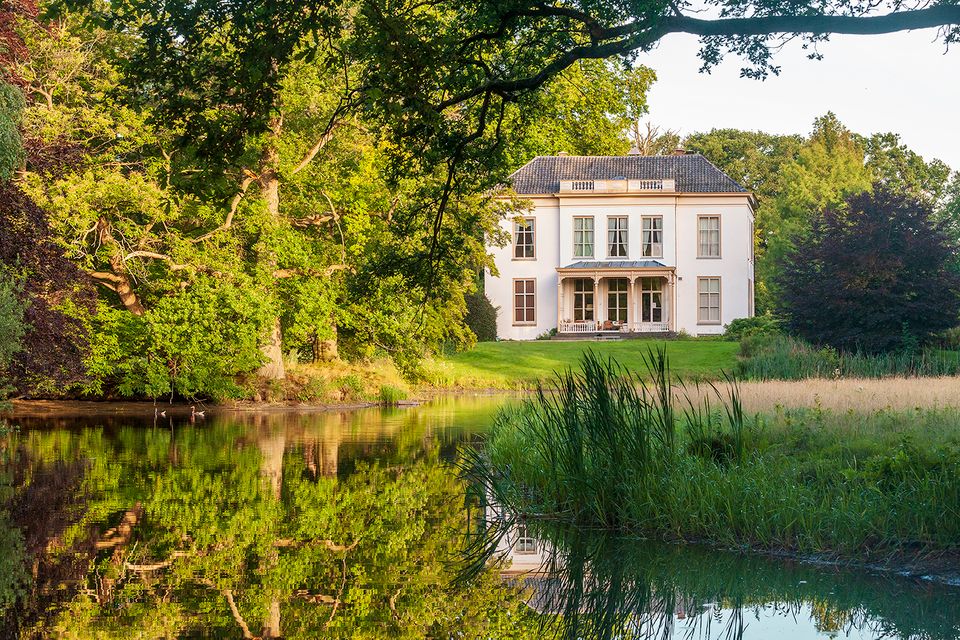
Huis Voorstonden was built in 1550 on the foundations of a 14th-century predecessor, possibly for the noble Van Wisch family. In the 17th e...
Huis Voorstonden was built in 1550 on the foundations of a 14th-century predecessor, possibly for the noble Van Wisch family. In the 17th century, it was owned by Anna van Wisch and her husband Alexander Schimmelpenninck van der Oye. In the 1656 pledge, Voorstonden was described as 'huys ende havesate genampt Voorstonde ofte den Poll in sijnne graften, bongaerden, straeten en de holtgewass met die landerien, daeronder gehorende'. In the late 18th century, a grand canal and a more landscaped pond were constructed at the rear of the house. In 1820, owner Alexander Diederik baron van Spaen (1779-1834) had the house radically modernised. The L-shaped house was extended into a rectangle with a pediment on the middle wing. Around the same time, park and garden were redesigned by J.D. Zocher sr. in landscape style, with much of the water features being excavated. The house received its current neo-classical appearance and block-like building mass in the years 1871-1872 (commissioned by Mr J.A.G. baron de Vos van Steenwijk). A giant sequoia was planted in 1876. With a girth of about 8 metres, it is now the thickest giant sequoia in the Netherlands. Between 1909 and 1921, the De Vos van Steenwijk family engaged landscape architect L.A. Springer, who designed a geometric garden right next to the house. Since 1977, the core of the estate with its moat house, garden, orangery and coach house has been owned by the Van Hoogenberk family. The remaining part is owned by Natuurmonumenten. The park forest was restored in 2012 whereby the ponds were cleaned up, paths refurbished and the club-arch bridge remade and placed, trees were planted, inlet work ponds restored, bullrushes and plants planted.